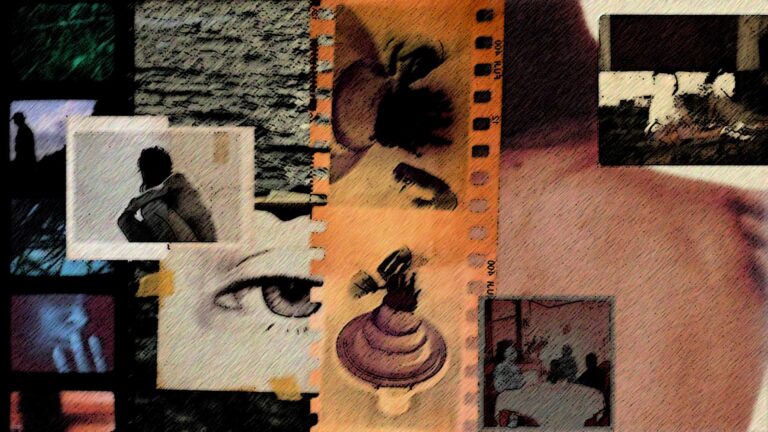

I write to lift it…
I do not know how long I have been afraid of writing. I do not know whether it is fear, or an attempt to escape my own features between the lines.
Or perhaps it is weight.
My phone rings.
A woman asks me what I was like when my daughter was away from me. Kept away from me, to be more precise.
What she is living today is what I lived yesterday. She tries to draw hope and strength from my present, or reassurance at least. And I have nothing left to offer but comfort, and will, a little of it.
What do I tell her? Where do I begin?
With the “slab” that pressed down on my chest? Or with the nights that lay in wait for me with insomnia, sweat and fire?
I dread confronting her with the grave whose desolation still lives inside my intestines, even after all this time. So I choose comfort instead, giving away what little will I have left.
Why do I call it giving away?
Today I admit that I burned out here, inside this cycle of bringing pain back to life, driving it again and again into the box of oppression that is my stomach.
Back to that “slab”.
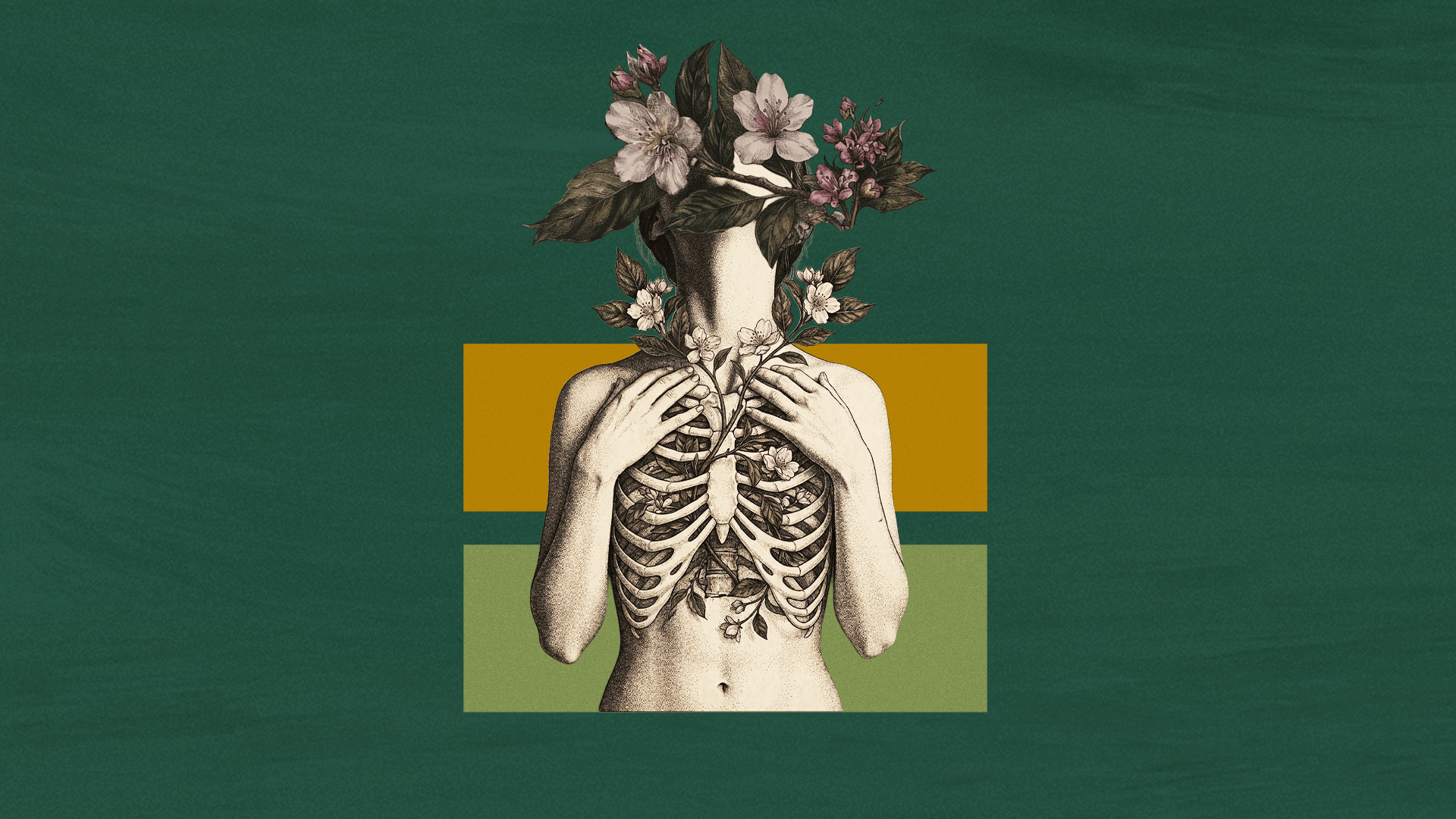
A wound crouched over my chest…
A hot sigh obstructing every inhale and exhale, obstructing life itself…
Here, somewhere between spirit and heart, between breath and pulse, in a place I cannot quite locate.
Here, on my chest, sits a spell I have named:
my mother’s wound.
In my mother’s name, then my mother’s, then my mother’s again.
Nothing bitter can sweeten while my mother remains oppressed.
In the name of her smile, the one that makes my pain easier to bear. In the name of the thousands of tears I inherited from her wound.
I may forgive no one in this entire universe except my mother.
I absolve her, however much she has hurt me.
I remember it clearly from my adolescence. Whenever her chest tightened, she would draw a long breath. I could hear its heartbreak and understand it, young as I was.
She would say:
“There’s a slab pressing down on my chest.”
I always believed her.
Since childhood, I have been able to sense the truth of mothers and their pain.
I never saw that “slab”.
I saw it in my mother’s oppressed face, in the lines that stored pain so they could hide it from us, in features that fought against being crushed.
I saw it in her weeping smile.
In her “lesser” rib, broken before the altar of custom, religion and law.
And then,
In the name of the tightening in my heart at every dawn.
In the name of my inflamed joints.
In the name of the stories my tongue never told, stories every pore of my skin memorised instead.
In the name of the daily jolt that accompanies the beginning of my sleep.
In the name of insomnia.
In the name of anxiety…
There is no sanctity beyond the sanctity of mothers, those goddesses.
At dawn, a year and a half after my daughter was taken away from me, I woke searching for a way to remember how to breathe.
It may sound imaginary, but for a moment my lungs seemed to lose their connection to my brain.
Suddenly, I could not remember how to draw breath.
I put both hands on my chest. I lifted my torso and began pounding my chest, again and again.
Without thinking, I said:
“God, there’s a slab on my chest.”
A moment that carried me straight back to my mother’s wound.
My mother, who had never managed to lift her own slab after my father shattered something in her when he rewarded her patience through all his hardships by taking a second wife.
Her world narrowed.
Her circle shrank.
Her breath shortened.
Her smiles grew fewer.
Even her beautiful voice, the one she once used to delight my father, became choked.
The isolation of betrayal is hard.
And I was not free not to inherit that isolation.
So yes.
Perhaps it is weight after all.
A heavy burden.
Where am I supposed to put the weight of time pressing against the wall of my stomach and living inside the cells of my intestines?
There is the burden of confronting.
The burden of running.
The burden of postponing.
The burden of stories that told me before I could tell them, and the stories in which I suddenly find myself standing halfway through, staring directly at a stammer.
I neither speak nor swallow my tongue.
There is the burden of holding steady, the steadiness that keeps me from writing the truth as it is, lest I pour oil into the reservoir of my loneliness.
The burden of reading myself in women’s stories.
The burden of finding myself again in every detail, only to swallow her with every denial.
I am neither immortalised inside the pain nor beyond it.
I am stuck somewhere in between.
I wrestle with weakness and pack away the relapse in my neck, but my shoulder bends.
So does my spirit.
A spirit overfed with experience.
Every time I lull one memory to sleep, another wakes.
It is not easy for me, travelling aboard the ferry of my own experiences as I sail through women’s stories, to peel myself away from what they have lived, or from narratives heavy with the engines of memory…
With every surge of anger, a button sends me back into the sea of resistance.
The alarm flares again.
Until I understood that no matter how gently we treat our wounds, the scars will still write themselves across our features.
And when we graduate, we will carry them like medals inside our organs.
As for me, every time I leave another examination hall, I exchange some of my features.
Or perhaps I lose them.
How do I rid myself of this attack of time inside my intestines, this IBS flare-up, long enough to write down all this pain?
I am on the verge of vomiting my present.
Instead, I swallow it.
Despite the weakness.
Despite time and decay.
I gulp down its truths, the truths I decorated myself with my good intentions, my patience, my optimism, my bets on goodness, my willingness to be deceived by the masks of peace around me.
Today, as I kick maturity in the stomach, I have stopped seeing people with my eyes.
I see them with my stomach and my intestines.
With my digestive system, which has become either my fiercest enemy or the most tender of my kin, depending on the creatures passing through.
Today, I console myself with the promise of crossing through.
I tell myself that getting past something is a matter of time, experience, denial, resistance, confrontation, aversion…
and then comes the crossing.
My phone rings again.
A notification.
Dozens of messages in the neglected corner of my inbox.
Lately I have trained myself to lighten the load, but something makes me scroll quickly through hundreds of abandoned messages in my virtual world.
“Keep your voice loud. Make sure your daughter can hear you. I know very well that my mother did not leave me of her own will. Mothers, even when they leave us, are forced to. Don’t lower your voice. I wish my mother had fought for me the way you fight for your daughter.”
It was not meaningless that I found her message at precisely that moment.
Five years later.
My daughter is beside me now.
I read it, and once again it carries me back to that distance between the mother whose daughter I once was, oppressed and weak, terrified of rebellion, and the rebellious mother I became.
And then,
One day, the pallor on my face will understand that my intestines are not thrown into turmoil by poisoned food, but by people, circumstances and restrictions that forced us to chew evil, then digest it with a reassuring smile:
Everything will be all right.
Every bitterness will pass.
This depravity will pass too.
One day I will understand that even if pain takes me captive, the pen will set me free.
And if I am afraid of writing, perhaps it is because I am afraid to look too closely at my own features through it.
The features of my spirit.
Writing will place me before myself, before my feelings, stripped of everything I have hidden behind for so long:
patience,
stoicism,
optimism,
looking the other way,
rising above,
masks of peace,
and that smile with which I greet the world to tell it I am fine.
Perhaps writing will not save me from pain so much as allow me to admit it.
To name it.
To place my hand where the slab was and say:
Here was the weight.
Here I suffocated in my daughter’s absence.
Here I inherited my mother’s wound.
And here I stitched my own wounds together.
I write today not to rid myself of everything that lives inside me, but so it does not remain lodged in my intestines alone.
I write to recover my voice.
And perhaps…
my mother’s and my daughter’s voices with it.